

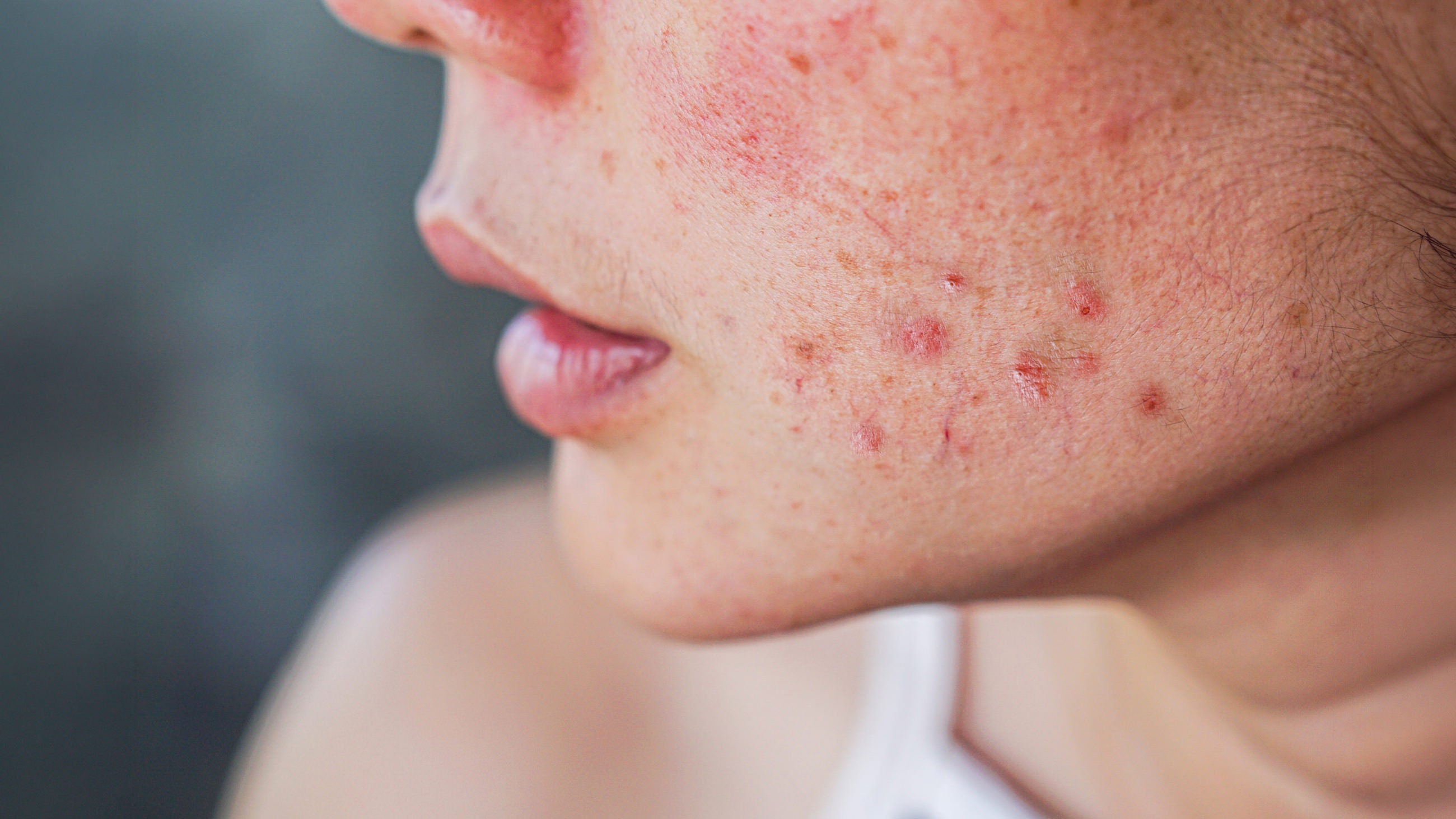
A Damaged skin barrier is one of the most common reasons a skincare routine suddenly stops helping and starts making your skin feel tight, red, stingy, flaky, or reactive.
If your skin used to tolerate everything and now seems angry by the middle of the day, you are not imagining it. Maybe your cheeks look pinker than usual. Maybe your moisturizer suddenly burns.
Maybe your face feels papery around the nose, but somehow still oily at the same time. I see this often, especially in women who are doing all the “smart” things and still not getting the calm, healthy skin they expected.
The fix is usually not a bigger routine. It is a gentler one.
In this article, I’m going to cover:
- what your skin barrier actually does
- the 4 habits that quietly wear it down
- the simple 3-step skincare routine that helps support repair
- when to add actives back in
- when it is time to stop guessing and see a provider
Watch the video Skin Barrier Damaged? Here's What You're Doing Wrong video on YouTube.
What your skin barrier actually does
Your skin barrier is your outer defense layer. Its job is simple but important: keep water in and keep irritants out.
A good way to picture it is a brick wall. Your skin cells are the bricks. The natural fats around them are the mortar. When that wall is healthy, your skin tends to feel smoother, calmer, and more resilient. When the mortar starts to break down, moisture escapes more easily and irritating things get through more easily.
That is when skin starts acting unpredictable.

A damaged skin barrier can show up as dryness, stinging, redness, rough texture, flaking, breakouts, or a general feeling that nothing seems to work anymore.
Products you used for months can suddenly feel too strong. Cleansing can leave your face feeling tight. Makeup can start catching on patches. Skin may look shiny and dehydrated at the same time.
That is why barrier issues are so confusing.
Most people expect a damaged skin barrier to look dramatic. Sometimes it does. But often it shows up as a collection of smaller changes that build over time.
A little more tightness. A little more redness. A little more reactivity. Then one day you realize your skin has not felt comfortable in weeks.
Signs of a damaged skin barrier
Here are some of the most common signs:
- skin feels tight after washing
- moisturizer or serum stings on application
- cheeks look pink or red more often
- rough patches or flaking show up around the nose, mouth, or cheeks
- skin feels extra sensitive to products you used to tolerate
- you feel oily and dry at the same time
- makeup looks uneven or clingy
- breakouts happen alongside irritation
One of the biggest clues of a damaged skin barrier is when your skin reacts more as the day goes on. Morning starts off fine, then by afternoon your face feels uncomfortable, warm, or dry. Another clue is when you keep adding hydrating products and still feel worse, not better.
That is usually a sign the issue is not a lack of products. It is a routine that is asking too much from stressed skin.

Why “good” routines can backfire
A lot of people with a damaged skin barrier are not ignoring their skin. They are overworking it.
That is why this problem is so frustrating. The women dealing with it are often the most conscientious. They research ingredients. They buy quality products. They follow skin influencers. They build detailed morning and evening routines. They want to take good care of their skin.
But somewhere along the way, skincare started to feel like a contest in how many steps you could stack onto one face.
Cleanser. Exfoliating toner. Vitamin C. Hyaluronic acid. Niacinamide. Peptides. Moisturizer. Sunscreen in the morning. Then at night, double cleanse, retinoid, treatment serum, overnight mask, maybe an acid on alternate nights.
That is a lot of traffic.
Even great ingredients can become too much when they are layered together too often. Skin has a threshold. Once you push past it, the same products that looked promising on paper can leave your face looking stressed in real life.
That is why repairing a damaged skin barrier often starts with subtraction.
Habit #1: Over-exfoliating when your skin is already irritated
This is one of the biggest barrier wreckers I see.
If your skin already feels tight, red, stingy, or flaky, exfoliation is usually not helping. It is usually keeping the irritation going. That includes physical scrubs, cleansing brushes, exfoliating pads, glycolic acid, lactic acid, salicylic acid, and “gentle resurfacing” products that are not actually gentle on compromised skin.
Now, I am not anti-exfoliation.
Exfoliation has a place. It can help with texture, congestion, acne, and dullness. But timing matters. Frequency matters. And your skin’s current condition matters.
When your barrier is already overwhelmed, exfoliation becomes one more stressor.
A lot of people have been trained to think that tingling means a product is working. It does not. If your face burns, stings, or feels stripped after a product, that is not always a badge of honor. On irritated skin, sensation is often a warning.
If this sounds familiar, the best move is usually to stop all exfoliation for a few weeks. Not just the harsh scrub. All of it.
That is what gives the skin room to calm down.
The American Academy of Dermatology’s dry skin guidance supports the same approach: gentle cleansing, warm rather than hot water, and consistent moisturizing. When skin is compromised, gentler is smarter.
Habit #2: Layering too many actives at once
This habit catches people off guard because the products involved often have excellent reputations.
Vitamin C can be great.
Retinoids can be great.
Acids can be great.
Niacinamide can be great.
But too many actives at once can turn a solid routine into a daily irritation cycle.
This is where people get stuck. They do not want to stop using the products they paid for. They worry they will lose progress. So they push through the redness, the sting, and the tightness because they assume the skin just needs time to adjust.
Sometimes it does.
But sometimes it is telling you very clearly that the routine is too aggressive.

If your moisturizer burns after your active steps, your barrier is not thanking you for your dedication. It is asking for less.
During a barrier-repair phase, I usually want vitamin C, retinoids, and exfoliating acids on pause. That does not mean those ingredients are bad forever. It just means this is not the moment to keep forcing them.
Think of it this way: inflamed skin does not need more coaching. It needs less demand.
Once the barrier feels calm again, you can bring actives back in slowly and in a smarter order. But while your skin is stinging and flushing, piling on more “helpful” ingredients usually does the opposite of helping.
If you need a clean way to rebuild later, the Fix Studios Pro Skincare Layering Guide is helpful for figuring out product order without turning your routine back into chaos.
Habit #3: Using fragranced or drying products on stressed skin
When the skin barrier is healthy, it can tolerate more. When you have a damaged skin barrier, the margin for error gets much smaller.
That is why heavily fragranced products and formulas with drying alcohols can suddenly become a problem. Something your skin used to handle fine may now feel irritating. A cleanser can start leaving you tight. A toner can start stinging. A treatment serum can feel hot on the cheeks for no good reason.
This is when label-checking matters.
I am not saying every bit of fragrance is always evil. I am saying that when skin is reactive, you want fewer possible irritants, not more. This is not the time for “spa-like” sensation or strong scent. It is the time for calm, plain, predictable formulas.
And while we are here, let’s retire the idea that squeaky-clean is the goal.
It is not.
Comfortable is the goal. Soft is the goal. Calm is the goal.
If your skin feels tight right after cleansing, that is a clue. If it looks shiny and feels papery before you even get to moisturizer, that is another clue. Harsh cleansing alone can keep a damaged skin barrier stuck in a loop, no matter how many hydrating steps you add afterward.
Habit #4: Trying new products too fast
This habit turns irritated skin into a mystery.
The moment skin starts acting up, many people panic-buy. A barrier serum. A redness cream. A new cleanser. A sleeping mask. A calming mist. A “sensitive skin” sunscreen. Then something breaks them out, something burns, something pills under makeup, and now they have no idea what is helping or hurting.
That makes recovery harder.
When you have a damaged skin barrier, simplicity matters more than novelty.
In general, one new product at a time is a great rule. During a true repair phase, even that may be too much unless you are replacing something obviously irritating with something gentler.
Your face is not a testing lab.
A simple skincare routine only works if you let it stay simple long enough to do its job. Most people do not fail because their skin cannot recover. They fail because they get impatient and start changing things too soon.
How to repair your damaged skin barrier with a simple 3-step skincare routine
When skin is irritated, the best routine usually looks almost boring. That is exactly what you want.
A 3 step skincare routine for barrier repair is simple:
- cleanse gently
- moisturize
- protect with sunscreen
That is it.
Step 1: Cleanse gently
Use lukewarm water, not hot. Hot water can strip natural oils and make already irritated skin feel worse.
If your skin is very dry or reactive, you may not need a full cleanser in the morning every single day. Some people do fine with a water rinse. If you do cleanse, use a gentle, hydrating, pH-balanced cleanser that does not leave your face feeling stripped.
At night, if you are wearing makeup or sunscreen, a gentle double cleanse can help. Use micellar water or an oil cleanser first, then follow with your regular gentle cleanser.
The test is simple: your skin should feel clean, not punished.
If it feels squeaky, tight, or “too clean,” that cleanser is probably too harsh for your current skin condition.
The AAD also recommends warm water instead of hot and gentle cleansing practices for dry, irritated skin. Those basics matter more than people think.
Step 2: Moisturize with barrier-supportive ingredients
This step is non-negotiable, even if your skin is oily.
When you have a damaged skin barrier, moisturizer helps reduce water loss and improve comfort. It does not just sit on top of the skin. The right moisturizer helps your face feel normal again.
Look for formulas with ingredients like:
- ceramides
- hyaluronic acid
- glycerin
- niacinamide
Ceramides are especially useful because they help support the lipid barrier. Hyaluronic acid and glycerin attract water. Niacinamide can be helpful in the right formula, especially if it is not paired with a bunch of irritating extras.
The main question is not whether a product is trendy. It is whether your skin feels calmer after you use it.
Does the tightness ease up?
Does the sting stop?
Does your face feel comfortable longer through the day?
That is the benchmark.
If you want help with how to layer products once your skin settles, The Secret to Perfect Skin: How to Layer Skincare Products Like a Pro is a strong next step. And if hyaluronic acid has ever seemed to make your face feel tighter, this post on the #1 Hyaluronic Acid Serum Mistake That Dries Skin Out explains why that can happen.
Watch the full video on the Hyaluronic Acid Mistake That's Ruining Your Skin on YouTube.
Step 3: Protect with SPF 30 or higher
If you are trying to repair your damaged skin barrier and skipping sunscreen, you are making the job harder.
Daily sun exposure adds stress to skin that is already trying to recover. That is why the AAD recommends broad-spectrum sunscreen with SPF 30 or higher.
Think of sunscreen as the roof over the wall you are rebuilding.
You can work on the barrier all day, but if you leave it unprotected, you keep exposing it to the same damage.
And no, sunscreen is not just for beach days. It matters on ordinary days too.
What your morning and night routine should look like during the reset
When you are repairing a damaged skin barrier, your routine should feel refreshingly simple.
Morning
Gentle cleanse if needed
Moisturizer
Broad-spectrum SPF 30+
Evening
Remove makeup or sunscreen gently if needed
Gentle cleanser
Moisturizer
That is it.
No exfoliating toner.
No retinoid.
No acid.
No vitamin C if your skin is actively irritated.
No bonus steps because you feel impatient after three days.
A lot of people start feeling better within two to four weeks once they actually commit to this kind of routine. More complete recovery can take longer, especially if the barrier has been stressed for a while.
The point is not to make the routine interesting. It is to make your skin comfortable again.
What to avoid while your skin is calming down
During a repair phase, these are the big things I want off the table:
- physical scrubs
- exfoliating acids
- retinoids
- vitamin C if it stings
- hot water
- fragranced products
- drying toners
- too many new products
- over-cleansing
- picking at flakes or peeling skin
This is where a lot of people slip up. They are willing to simplify, but they quietly keep one or two irritating habits in place and then wonder why the redness never fully settles.
Repair means reducing friction wherever you can.
The ingredients that usually make the most sense
When skin is irritated, ingredient shopping should get boring. That is not a bad thing.
A damaged skin barrier usually responds best to calm, supportive ingredients rather than anything marketed as intense, resurfacing, or corrective.
The formulas that tend to make the most sense are:
- Gentle cleansers
- moisturizers with ceramides
- humectants like hyaluronic acid and glycerin
- well-balanced products with niacinamide
- daily sunscreen
This is also a good time to pay attention to how products feel, not just how they are marketed. A beautiful label does not mean your skin will love it. A luxury price point does not mean it is right for reactive skin.
What matters is whether your face feels more comfortable over time.
When to add retinol and vitamin C back in
Once your skin feels calm again, you can start adding things back. Slowly is the important word.
Do not reintroduce everything at once because your face had a good week.
Start with retinoid one to two nights a week. Watch your skin for at least a couple of weeks. If it stays comfortable, you can build gradually from there. Once your skin is tolerating that well, then think about adding vitamin C back into the morning routine.
A solid maintenance routine can look like this:
Morning
Cleanse
Vitamin C
Moisturizer
Sunscreen
Evening
Cleanse
Retinoid on selected nights
Moisturizer
That is a complete routine. It does not need ten extras to be effective.
If reintroducing a product immediately brings back heat, stinging, or tightness, back off. That is useful information. Pay attention to it.
When it is time to see a provider
Sometimes a simple routine is enough to fix the problem. Sometimes it is not.
If you have simplified for four to six weeks and your skin is still burning, stinging, flushing, breaking out, or reacting to everything, it may be time to stop troubleshooting on your own.
Persistent irritation is not always just barrier damage. Sometimes it is rosacea. Sometimes eczema. Sometimes acne plus inflammation. Sometimes contact dermatitis. Sometimes it is a mix of several things.
That is when professional guidance matters.
If your skin still feels reactive or impossible to figure out, book a consultation with Fix Studios. We can help you identify what may be stressing your skin and build a plan that supports a calmer, healthier-looking complexion.

Fix Studios Glissen™ Mineral Radiance Broad Spectrum SPF 50 Sunscreen is one of the best medical-grade SPF options that won't cause further damage to your skin barrier.
FAQs
| Question | Answer |
| How do I know if my skin barrier is damaged? | Common signs include tightness after cleansing, redness, stinging when you apply products, flaking, rough patches, and skin that suddenly feels reactive or unpredictable. |
| How long does skin barrier repair take? | Many people notice improvement within 2 to 4 weeks after simplifying their routine. More complete recovery can take 4 to 8 weeks depending on how irritated the skin is. |
| Should I stop retinol if my moisturizer stings? | In many cases, yes. If your skin is actively irritated, pausing retinol during the repair phase is often the smartest move. |
| Can oily skin still have a damaged skin barrier? | Yes. Oily skin can still be dehydrated, irritated, and barrier-impaired. |
| What ingredients help support skin barrier repair? | Look for a gentle moisturizer with ceramides, hyaluronic acid, glycerin, and niacinamide. |
| Do I need sunscreen while repairing my skin barrier? | Yes. Daily broad-spectrum SPF 30 or higher helps protect skin while it is trying to recover. |
Final Thoughts
A damaged skin barrier can make your skin feel like it changed overnight, but usually the warning signs build slowly. A little more tightness. A little more redness. A moisturizer that suddenly stings. A routine that keeps getting bigger while your skin keeps getting less happy.
That is why the answer is usually not another serum.
It is a reset.
Pause the exfoliation. Pause the actives. Stop introducing new products. Cleanse gently. Moisturize consistently. Protect with SPF every morning. Then give your skin enough time to respond.
That is how you support real skin barrier repair.
And that is how a simple skincare routine starts working for you again instead of against you.
Disclaimer
This article is for informational purposes only and should not be considered medical advice. Results vary from person to person. Always consult with a qualified provider before starting any treatment.

Share:
Why Your Neck Looks Older Than Your Face: 4 Ways to Fix It
Sun Damage Treatment: Why Your Skin Looks Older After 40