

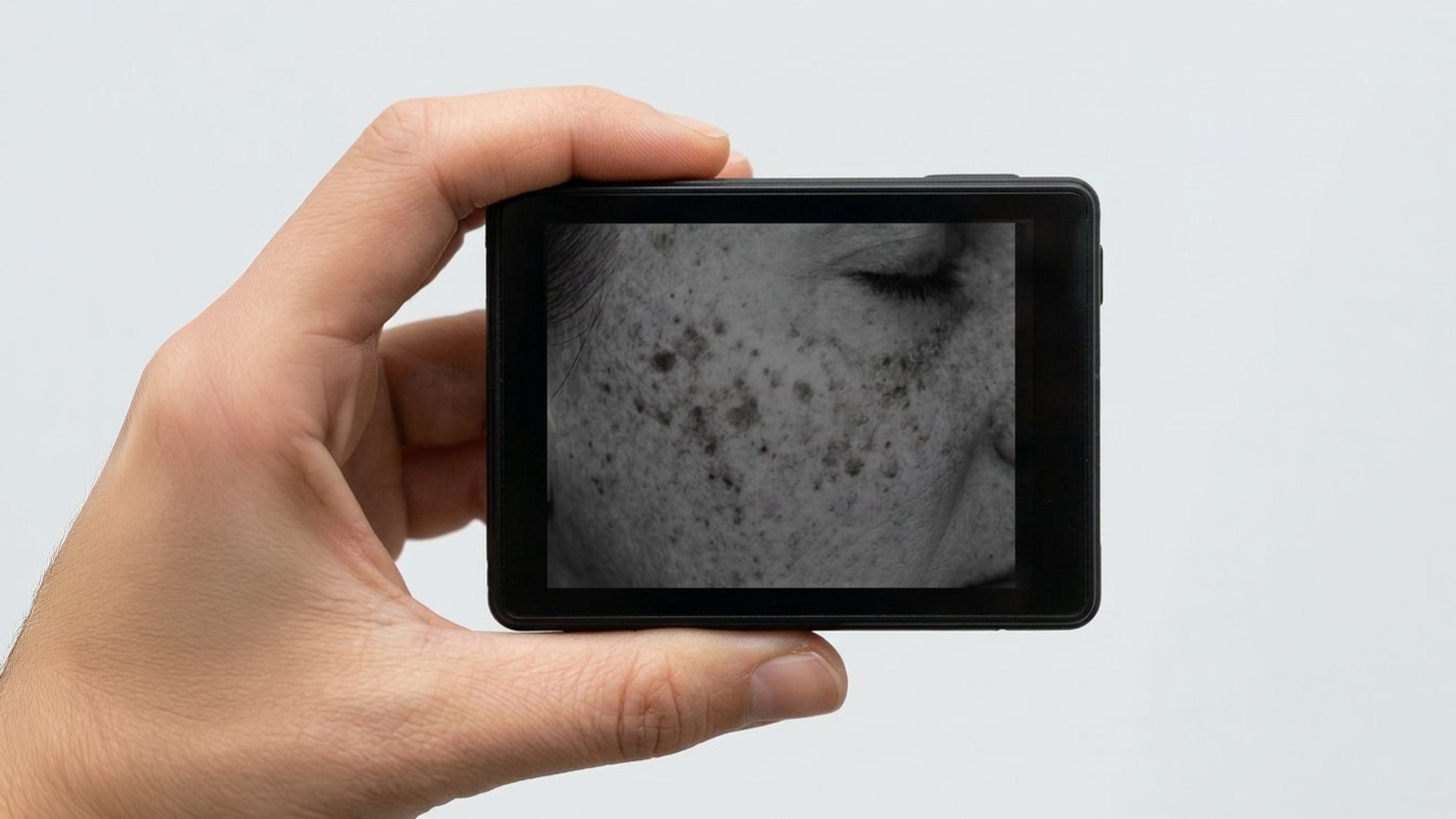
Sun damage treatment becomes a bigger concern for many people after 40, when brown spots, fine lines, dullness, redness, and uneven tone can suddenly seem more noticeable.
You look in the mirror one morning and something feels different.
Maybe it is a brown spot that looks darker than it did last summer. Maybe the fine lines around your eyes suddenly seem sharper. Maybe your skin looks dull, uneven, or a little more textured than it used to.
And the first thought is usually: “Well… I guess this is aging” and rarely "I need a sun damage treatment."
But here’s the real talk: a lot of what you are seeing may not be “just age.” It may be sun damage that has been building quietly for years before finally becoming visible. This is called photoaging, which means premature visible aging caused by UV exposure. Cleveland Clinic notes that photoaging is responsible for about 90% of visible changes to the skin.
Prefer to watch instead? Dr. Beth explains why sun damage can suddenly look more noticeable after 40 in the video below and shows examples of sun damage treatments. Watch below or click here to watch on YouTube.
In this article, we’ll talk about why sun damage can seem to show up all at once, why it often becomes more noticeable after 40, and where options like Lumecca IPL photofacial treatments may fit into a thoughtful sun damage treatment plan.
Sun Damage Does Not Stop at 18
For years, many of us heard that most sun damage happens before adulthood. The problem is, that idea is not the whole story.
One widely cited analysis found that Americans get less than 25% of their lifetime UV dose by age 18. That means UV exposure does not magically stop mattering after high school graduation. It keeps stacking through your 20s, 30s, 40s, and beyond.
That is why I like to describe sun damage as a delayed bill.
You may not see the receipt right away. Your skin may look smooth in your 20s. It may bounce back quickly after a beach weekend or a summer by the pool.
But underneath the surface, UV rays are already affecting collagen, elastin, pigment, and skin cell health. The video script frames this as cumulative damage that can stay quiet for years before showing up as brown spots, fine lines, redness, dullness, and texture changes.
So no, your skin probably did not age overnight.
It may just be that the bill finally arrived.

What Photoaging Actually Means
Photoaging is premature skin aging caused by ultraviolet exposure.
That is different from chronological aging, which is the natural aging process connected to time, genetics, and biology. Cleveland Clinic explains that photoaging is caused by a lifetime of UV radiation exposure, mostly from the sun, and can create changes in the skin cells.
Photoaging can show up as:
| Visible Change | What You May Notice |
| Brown spots | Sun spots, age spots, freckles, or patchy pigment |
| Fine lines | Especially around the eyes, mouth, and cheeks |
| Uneven tone | Skin looks blotchy or less bright |
| Rough texture | Makeup does not sit as smoothly |
| Redness | Broken capillaries or visible vessels |
| Dullness | Skin looks tired even when you are rested |
| Laxity | Skin looks less firm or less resilient |
This is why sun damage treatment is rarely about one single spot.
Most of the time, we are looking at a mix of pigment, redness, collagen changes, texture, hydration, and skin barrier health.
That is also why a one-size-fits-all plan usually falls short.
Why Sun Damage Often Looks Worse After 40
The 40s are often when people start saying, “What happened to my skin?”
You may notice that pigment looks darker. Your skin may feel thinner or drier. Fine lines may hang around longer after you smile. A spot that seemed faint a few years ago may suddenly look more obvious.
This is not your imagination.
This matters because people often blame themselves.
They think, “I must have done something wrong recently.”
But the skin changes you notice now may be connected to years of cumulative exposure. Tennis. Pool days. Driving without sunscreen. Tanning beds. Vacations. Outdoor workouts. Sitting by sunny windows. All of it can add up.
And let’s be honest. Most of us were not applying the perfect amount of sunscreen every two hours in our 20s.
That does not mean you are stuck. It simply means we need to understand what we are treating.
A good sun damage treatment plan starts by asking: Is this mostly pigment? Redness? Texture? Collagen loss? Melasma? A combination?
That answer matters.

Why It Can Accelerate in Your 50s
If the 40s are when sun damage often becomes noticeable, the 50s can be when it feels like it hits the gas pedal.
For many women, menopause plays a major role.
The American Academy of Dermatology notes that women’s skin loses about 30% of its collagen during the first five years of menopause. After that, collagen loss continues more gradually.
Collagen is a big deal because it helps skin look firm, dense, and resilient.
So now imagine cumulative UV damage meeting skin that is thinner, drier, and less collagen-rich. That is why deeper lines, laxity, rough texture, and more noticeable pigment can seem to stand out more.
This is the “perfect storm” the video script talks about: years of UV exposure plus hormonal skin changes that can make previous damage look more dramatic.
This does not mean every change after 50 is sun damage. Genetics, hormones, lifestyle, stress, medications, and natural aging all matter too.
But UV exposure is one of the biggest pieces of the visible-aging puzzle.
The Health Side Matters Too
Sun damage is not only cosmetic.
Yes, brown spots and uneven tone can be frustrating. But the health piece matters just as much.
The American Academy of Dermatology notes that one blistering sunburn during childhood or adolescence can nearly double a person’s risk of developing melanoma later in life.
That does not mean you should panic over every spot. It does mean changing, bleeding, non-healing, rough, or suspicious areas deserve medical attention.
Actinic keratoses are a great example. The AAD describes actinic keratosis as a precancerous skin growth that develops on skin badly damaged by UV light from the sun or indoor tanning.
So here is the clean rule:
If a spot is changing, bleeding, crusting, rough, scaly, painful, or simply worrying you, have it checked by a qualified medical provider.
A blog post cannot diagnose your skin.

Can You Improve Sun Damage Once You See It?
Here is the part I really want you to hear: it is not too late.
You may not erase every single sign of past sun exposure. That would not be an honest promise.
But many visible signs of sun damage can be improved with the sun damage treatment right plan.
That plan usually has two parts: protection and correction.
Daily sun protection helps prevent new damage from stacking up. Photoprotection includes sunscreen, clothing, hats, sunglasses, and other barriers. NCBI Bookshelf notes that photoprotection is essential for reducing UV-related skin damage and skin cancers.
Correction is where professional treatments and medical-grade skincare may help improve the look of existing concerns.
At Fix Studios, we often think through questions like:
Is the main concern brown spots?
Is redness part of the picture?
Is the texture rough or crepey?
Is there melasma?
Is the skin barrier healthy enough for treatment?
Is the client looking for brightness, firmness, smoother texture, or all of the above?
That is why we recommend starting with a personalized skin consultation instead of guessing from the mirror. For new patients, the first visit at Fix Studios is designed to be educational, customized, and no-pressure.
Where IPL Fits Into Sun Damage Treatment
IPL stands for intense pulsed light.
In plain English, IPL uses light energy to target unwanted pigment and visible redness in the skin. It is commonly used for concerns like brown spots, sun spots, uneven tone, redness, and visible signs of photoaging.
NCBI Bookshelf describes IPL as a versatile tool used for benign pigmented and vascular disorders, hair removal, and reducing signs of photoaging.
That is why IPL can be such a helpful option when your main concerns are discoloration, dullness, and redness.
At Fix Studios in Mason, Ohio, we use Lumecca IPL to target concerns like sun damage, brown and red spots, freckles, rosacea, and uneven tone. The current Fix Studios Lumecca page describes it as a treatment for sun damage, age spots, redness, brown spots, freckles, rosacea, and uneven tone.

This is where the conversation gets exciting — but also where we stay realistic.
IPL is not for every skin type, every pigment concern, or every season of life. For example, melasma can be more complicated and may flare with heat or light, so it needs careful evaluation. Some clients may need skincare prep first. Others may benefit from a different treatment path.
That is why a thoughtful sun damage treatment plan matters more than chasing one trendy device.
The goal is not to do “more.”
The goal is to do what makes sense for your skin.
What About Skincare?
Professional treatments can do a lot, but your daily routine still matters.
Think of in-office treatments as the bigger pushes. Your skincare routine is the daily support system.
For sun damage treatment, a strong routine often focuses on:
| Skincare Goal | Why It Matters |
| Sun protection | Helps reduce future UV damage |
| Antioxidant support | Helps support skin against environmental stress |
| Barrier repair | Keeps skin calm, hydrated, and resilient |
| Pigment support | Helps address uneven tone over time |
| Retinoid support | May help with texture and fine lines when appropriate |
This does not mean you need a 12-step routine.
In fact, most people do better with a simple, consistent plan they can actually follow.
If your bathroom drawer is full of half-used products and you still feel confused, that is a sign you may need guidance. Fix Studios carries medical-grade skincare that can support concerns like sun damage, dryness, dullness, and early aging, but the best products are the ones that fit your skin and your goals.

What a Good Sun Damage Treatment Plan Should Include
A strong sun damage treatment plan should be personal, realistic, and honest.
It should include a clear look at what is actually happening in your skin. Brown spots are not always the same thing as melasma. Redness may need a different approach than pigmentation. Fine lines may need collagen support, not just brightening products.
A thoughtful plan may include sunscreen, medical-grade skincare, IPL, collagen-supporting treatments, or a combination.
At Fix Studios, our goal is always natural-looking improvement. Brighter, healthier-looking skin. A more even tone. A refreshed look that still feels like you.
Not overdone.
Not pressured.
Not sold a treatment that does not make sense.
Just real talk, medical-grade expertise, and a plan that respects your skin.
When to Get a Spot Checked
Please do not ignore a spot that concerns you.
A sun spot that is stable and cosmetic is one thing. A changing lesion is another.
You should contact a qualified medical provider or dermatology professional if you notice:
| Skin Change | Why It Matters |
| A spot that changes size, shape, or color | It needs medical evaluation |
| A rough, scaly patch that will not heal | Could be actinic keratosis or another concern |
| A bleeding or crusting spot | Should not be ignored |
| A new dark or irregular mole | Needs professional review |
| A lesion that feels painful or different | Worth checking |
This article is educational. It is not a diagnosis.
When in doubt, get it checked.

FAQs About Sun Damage Treatment
| Question | Answer |
| Does sun damage really show up years later? | Yes. UV damage can build quietly and later appear as brown spots, fine lines, roughness, dullness, redness, and uneven tone. |
| Why does sun damage look worse after 40? | Earlier UV exposure may become more visible as collagen, pigment regulation, and skin repair change with age. |
| Can menopause make sun damage look worse? | It can make visible changes more noticeable because collagen loss affects firmness, texture, and resilience. |
| Can IPL help sun damage? | IPL is commonly used for pigment and redness linked to photoaging, including brown spots and uneven tone. |
| Is all skin aging caused by the sun? | No. Genetics, hormones, lifestyle, and natural aging matter too. But UV exposure is a major driver of visible photoaging. |
| Should rough scaly spots be checked? | Yes. Rough, scaly, non-healing, changing, or bleeding spots should be evaluated by a qualified medical provider. |
| Is Lumecca IPL right for everyone? | Not always. Skin type, pigment type, melasma history, recent sun exposure, and medical history all matter. A consultation helps determine the safest plan. |
The Bottom Line
Your skin did not age overnight.
The story of your skin and the sun was written over years. Maybe decades. The pool days, beach trips, tennis matches, tanning beds, sunny drives, and “I’ll put sunscreen on later” moments can all add up.
But understanding that timeline is not about regret.
It is about knowing what your skin is doing, why it is doing it, and what can still be improved.
If brown spots, dullness, redness, rough texture, or uneven tone are bothering you, a personalized sun damage treatment plan can help you make sense of your options. For many people, that may include daily sun protection, medical-grade skincare, and treatments like Lumecca IPL at Fix Studios.
Ready for real talk about your skin? Schedule a consultation with Fix Studios in Mason, Ohio, and let’s create a thoughtful plan for brighter, healthier-looking skin.
If you’re looking for sun damage treatment near me, Fix Studios offers sun damage treatments in Cincinnati OH and is located in Mason OH and conveniently located near Montgomery OH, Sycamore Township OH, Symmes Township OH, West Chester OH, Blue Ash OH, Loveland OH, Landen OH, Sharonville OH, Evendale OH, Fairfield OH, Hamilton OH, and other areas of Greater Cincinnati.
Disclaimer
This article is for informational purposes only and should not be considered medical advice. Results vary from person to person. Always consult with a qualified provider before starting any treatment.


Share:
4 Skincare Habits Wrecking Your Skin Barrier
Lumecca IPL Cincinnati Mason: 5 Skin Changes to Expect After IPL