

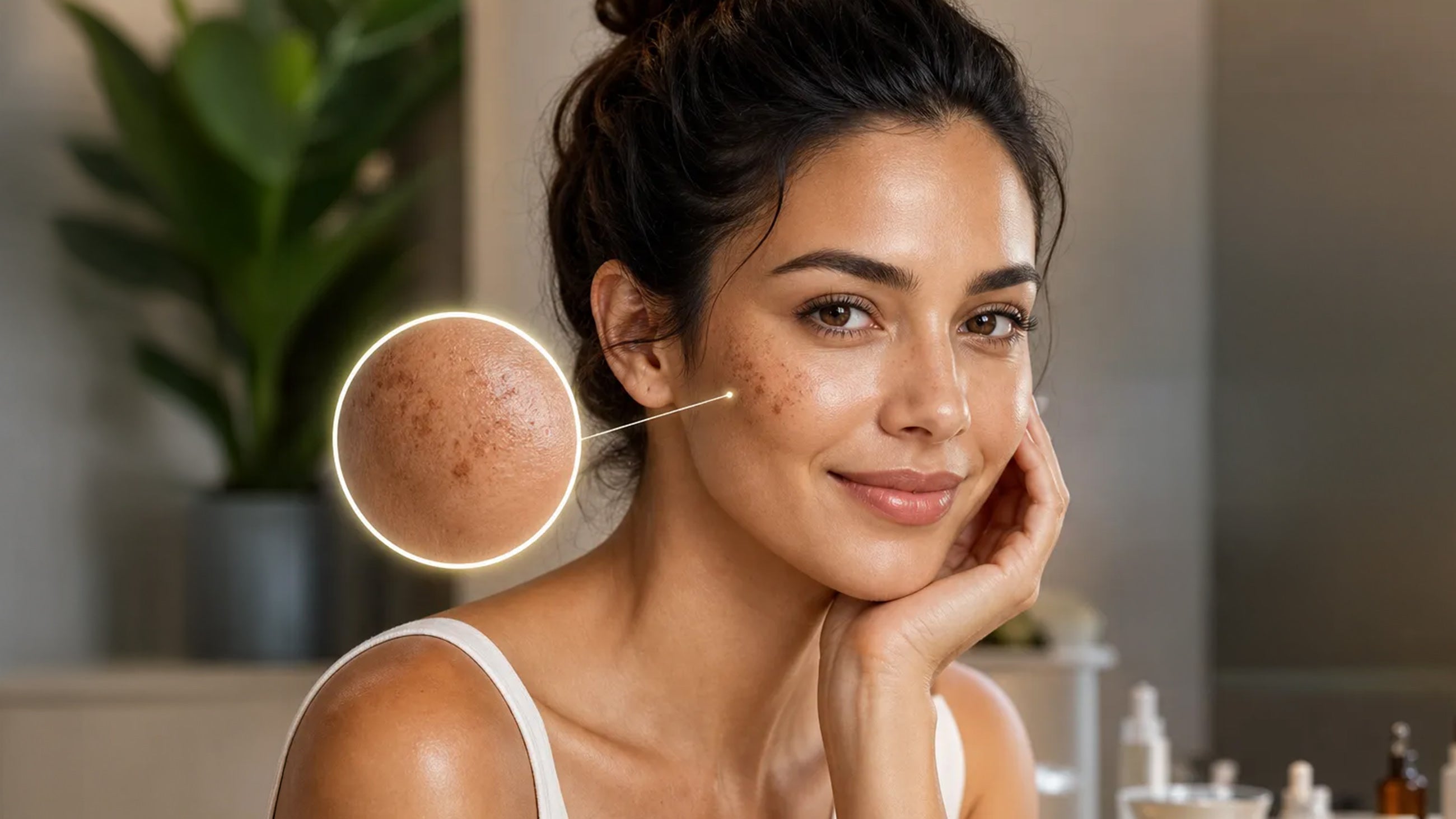
Chemical peel Cincinnati searches usually start with one big question: will a peel actually fade dark spots, or is there a better treatment for your skin?
That is a smart question.
At Fix Studios, dark spots are one of the most common concerns we hear about. Some clients are dealing with sun spots from years of pool days, golf, and outdoor summers. Others are frustrated by acne marks, melasma, uneven tone, or brown patches that seem to keep coming back.
Here is the real talk: a chemical peel can be a beautiful tool for dark spots. But it is not the right tool for every type of pigment.
The best plan depends on your skin tone, the type of pigmentation, your skincare routine, and how your skin reacts to inflammation.
In this guide, we’ll cover which peels may help, when Lumecca IPL may work better, and how to protect your results after treatment.
Why Dark Spots Need the Right Treatment Plan
“Dark spots” sounds simple, but it can mean several different things.
It may refer to melasma, post-inflammatory hyperpigmentation, sun spots, age spots, freckles, acne marks, or general uneven tone.
These concerns can look similar in the mirror. But they do not behave the same way.
That matters because the wrong treatment can waste time and money. Even worse, the wrong treatment can irritate your skin and make pigmentation look darker.
This is why a thoughtful consultation matters before any chemical peel Cincinnati treatment.
The goal is not just to peel the skin. The goal is to understand what kind of pigment you have, how deep it may be, and how reactive your skin is.
At Fix Studios in Mason, we look at the full picture. Sometimes a chemical peel is the right choice. Sometimes medical-grade skincare comes first. Sometimes a light-based treatment like Lumecca IPL Photofacial in Mason and Cincinnati is a better fit for visible sun damage and brown spots.
The magic is in matching the treatment to your skin.
Not the trend.
Not the strongest peel.
Not what worked for your friend.
Your skin.
The Main Types of Dark Spots
Before choosing a chemical peel Cincinnati treatment, it helps to know what kind of pigmentation you may have.
Melasma

Melasma often appears as patchy brown or gray-brown discoloration.
It commonly shows up on the cheeks, forehead, upper lip, and jawline. It can be triggered by hormones, pregnancy, birth control, heat, visible light, and sun exposure.
Melasma is stubborn. It can improve, but aggressive treatment can sometimes make it worse.
A chemical peel may be part of a melasma plan, but it should be chosen carefully. Many clients need pigment-supporting skincare, daily sunscreen, and a conservative treatment plan first.
Post-Inflammatory Hyperpigmentation

Post-inflammatory hyperpigmentation, often called PIH, happens after inflammation or injury.
That can mean acne, picking, a rash, a burn, or even an overly aggressive skincare routine.
PIH is common in deeper skin tones, but it can happen to anyone.
With PIH, the goal is to calm the skin while fading pigment gradually. Too much irritation can create more discoloration.
This is one reason we do not love the “stronger is better” approach.
Sun Spots and Age Spots

Sun spots and age spots are usually tied to years of UV exposure.
They often show up on the face, chest, neck, shoulders, and hands.
We see this often in clients who spent years outdoors without daily SPF. These spots may look like small brown marks that become more noticeable over time.
Chemical peels may help some sun damage. But for more distinct brown spots, Lumecca IPL may be more targeted.
A peel resurfaces.
IPL targets pigment with light energy.
Those are different tools.
How Chemical Peels Help Dark Spots
Chemical peel Cincinnati treatments uses an acid solution to create controlled exfoliation.
That exfoliation helps remove damaged surface cells and encourages fresher-looking skin to come forward.
Depending on the peel type and strength, a chemical peel may improve the appearance of uneven tone, dullness, rough texture, acne congestion, fine lines, and some pigmentation.
The American Academy of Dermatology notes that chemical peels may be used for concerns such as discoloration and certain acne-related issues. That is why many people search for chemical peel Cincinnati treatments when dark spots become more noticeable.
But peel depth matters.
A light peel may brighten skin with little downtime. A deeper peel may create more visible resurfacing, but it also carries more recovery and risk.
That tradeoff is especially important when pigmentation is the goal.
If skin becomes too inflamed, it may create more pigment while healing. This is why chemical peels should be chosen carefully, especially for clients with melasma, PIH, sensitivity, or deeper skin tones.
Who May Benefit From a Chemical Peel?
A chemical peel Cincinnati treatment may be a good fit if your pigmentation is mild to moderate and mostly surface-level.
Peels may help with:
- Dullness
- Mild sun damage
- Surface discoloration
- Rough texture
- Congested pores
- Post-acne marks
- Uneven tone
- Fine lines
A peel may not be the best first choice if your pigment is deep, your melasma is active, your skin barrier is irritated, or you recently had a lot of sun exposure.
It also may not be the right choice if you cannot commit to sunscreen.
That last one is huge.
A peel makes your skin more vulnerable while it heals. If you get sun exposure right after treatment, you can trigger new pigmentation.
At Fix Studios, we want the treatment to match your real life. If you have a beach trip next week, a peel may need to wait. If you are using strong actives every night, your skin may need a reset first.
The best results usually come from smart timing.

Which Chemical Peel Cincinnati Treatment Works Best for Dark Spots?
There is no single best chemical peel Cincinnati treatment for every dark spot.
The right peel depends on your pigment type, skin tone, sensitivity, current skincare, treatment history, and downtime tolerance.
Still, a few peel types are commonly used for pigmentation.
Glycolic Acid Peels
Glycolic acid is one of the best-known alpha hydroxy acids, or AHAs.
It has a small molecular size, so it penetrates efficiently. That can make it helpful for dullness, texture, uneven tone, and some surface pigmentation.
A glycolic acid peel may be useful for clients with general discoloration or rough texture.
But glycolic acid is not automatically gentle.
Because it penetrates quickly, it may irritate reactive skin if the strength or timing is not right.
For sensitive skin, glycolic acid may still be an option. But it needs to be selected carefully.
Mandelic Acid Peels
Mandelic acid is also an AHA, but it behaves differently.
It has a larger molecular size, so it penetrates more slowly. That slower action may make it better tolerated for sensitive or pigment-prone skin.
Mandelic acid may be a strong option for clients who want a gentler approach to uneven tone, mild pigmentation, or acne-prone skin.
It can also be helpful for clients who are nervous about peels or who have reacted poorly to stronger acids before.
The goal is not to attack the skin.
The goal is to move the skin toward a clearer, more even appearance without causing unnecessary inflammation.
TCA Peels
TCA stands for trichloroacetic acid.
TCA peels can be stronger than many superficial peels. They may help with stubborn discoloration, texture, and sun damage when used appropriately.
But TCA also comes with higher stakes.
A TCA peel may involve more visible peeling, more downtime, and a higher risk of post-inflammatory hyperpigmentation, irritation, hypopigmentation, or scarring if used too aggressively.
That does not mean TCA is bad.
It means TCA belongs in experienced hands.
If you are considering a chemical peel Cincinnati treatment because you want bigger pigment correction, TCA may come up during your consultation. But it should never be chosen casually from an online before-and-after photo.
Your provider should evaluate your skin tone, pigment type, history, current products, and ability to follow aftercare.
Salicylic Acid Peels
Salicylic acid is a beta hydroxy acid, or BHA.
It is oil-soluble, which means it can move into pores more effectively. That makes it useful for oily skin, clogged pores, acne, and post-acne discoloration.
If your dark spots are mostly leftover marks from breakouts, a salicylic acid peel may be a smart option.
It may not be the strongest choice for deep sun damage or melasma. But it can be a great starting point when acne and pigment are connected.
Sometimes the best first step is not the most dramatic one.
It is the one your skin can tolerate consistently.
Why Skin Tone Matters Before a Chemical Peel
Skin tone changes the risk equation.
The Fitzpatrick scale is commonly used to describe how skin responds to sun. It ranges from Type I, which is very fair and burns easily, to Type VI, which is deeply pigmented and rarely burns.
Clients with Fitzpatrick Types IV through VI may be more prone to post-inflammatory hyperpigmentation after irritation or inflammation.
If you are wondering what your skin type is, use our free Fitzpatrick Skin Type calculator here.
That does not mean deeper skin tones cannot have chemical peels.
It means the peel needs to be chosen with care.
For pigment-prone skin, the plan may include a gentler acid, lower strength, longer prep time, pigment-calming skincare, and very strict sunscreen use.
This is also why aggressive at-home peels can become a problem.
A product may be available online, but that does not mean it is safe for your skin type, pigment history, or current barrier health.
At-Home Peels vs. Professional Chemical Peels
At-home peels and professional peels are not the same.
At-home peels are usually lower in strength. They may help with mild dullness, smoothness, and very light surface discoloration.
For someone with a strong skin barrier and good sunscreen habits, an at-home product may help with maintenance.
But at-home peels are limited.
They cannot safely reach the same depth as professional peels. They also cannot evaluate your skin tone, melasma risk, acne history, medication use, or barrier health.
This is where people get into trouble.
Using more product does not create better results. It may create irritation, peeling, redness, burning, or rebound pigmentation.
Professional peels offer more control.
Your provider can choose the acid type, strength, layers, timing, and post-care plan based on your skin.
A professional chemical peel Cincinnati treatment should also include clear instructions. You should know what to stop before your peel, what to avoid after, and when to restart active ingredients.
You should never leave wondering what is normal.
When Lumecca IPL May Work Better
A chemical peel Cincinnati treatment is not always the top choice for dark spots.
For discrete sun spots, age spots, brown patches from UV exposure, and redness mixed with pigment, Lumecca IPL may be the better option.
Lumecca IPL uses intense pulsed light to target pigment and redness in the skin. Instead of exfoliating the surface, IPL uses light energy to heat pigment so the body can gradually clear it.
At Fix Studios, Lumecca IPL Photofacial in Mason and Cincinnati is often considered for clients dealing with sun damage, uneven tone, redness, and visible brown spots.
Lumecca IPL may be worth discussing if you say things like:
“My brown spots are not fading with skincare.”
“My chest has a lot of sun damage.”
“My foundation does not cover these spots anymore.”
“My skin looks blotchy.”
“My spots got darker after summer.”
For the right candidate, Lumecca IPL may create more targeted improvement than a peel alone.
That does not mean IPL is better for everyone.
It means it may be better for certain pigment patterns.
Chemical Peel vs. Lumecca IPL: How to Choose
A chemical peel may be better when the main concern is:
- Dullness
- Rough texture
- Mild surface discoloration
- Congestion
- Post-acne marks
- Uneven tone
- Fine lines
- General skin refreshment
Lumecca IPL may be better when the main concern is:
- Sun spots
- Age spots
- Redness
- Blotchy tone
- Visible brown spots
- UV-related discoloration
- Freckling from sun exposure
Some clients need both.
For example, one person may have rough texture and sun spots. A chemical peel Cincinnati treatment may help smooth and brighten the surface, while Lumecca IPL may better target brown pigment.
Another person may have melasma and a reactive skin barrier. That client may need skincare first, not an aggressive peel or IPL right away.
This is why a consultation saves time.
You are not just choosing between peel or IPL.
You are choosing the right order.
How to Prepare for a Chemical Peel
The peel itself is only part of the plan.
Prep matters.
The NCBI Bookshelf clinical review on chemical peels discusses chemical peels for several skin concerns, including pigment-related conditions. It also notes that pigment-risk precautions may be used for patients who are more prone to hyperpigmentation.
That does not mean every client needs the same prep.
It means pigment-prone skin deserves a thoughtful plan.
Before a chemical peel Cincinnati treatment, your provider may ask you to pause certain products.
These may include:
- Retinoids
- Tretinoin
- Glycolic acid
- Salicylic acid
- Scrubs
- Benzoyl peroxide
- Harsh exfoliants
- Strong vitamin C formulas
- Self-tanner
- Waxing in the treatment area
Your provider may also recommend a gentle cleanser, barrier moisturizer, daily SPF, pigment-supporting skincare, or medical guidance if you have a history of cold sores.
Do not guess.
Ask.
A peel is not just skincare.
It is a controlled skin procedure.
Aftercare That Protects Your Results
Aftercare is where many dark spot plans succeed or fail.
You can choose the right peel and still lose ground if your post-care is too aggressive.
After a chemical peel, your skin barrier needs support. That means gentle products, hydration, protection, and patience.
Your provider’s instructions come first, but post-peel care often includes:
- Gentle cleanser
- Barrier moisturizer
- No scrubs
- No picking
- No retinoids until cleared
- No exfoliating acids until cleared
- No direct sun exposure
- Daily mineral SPF
- Makeup pause if recommended
Please do not peel the skin yourself.
Picking can cause irritation, scabbing, delayed healing, or more pigment.
Let the skin shed naturally.
And if dark spots are your concern, sunscreen is not optional. It is part of the treatment.
Use broad-spectrum SPF every day. Reapply when outdoors. Wear hats when possible.
Cincinnati weather can be sneaky. UV exposure still matters during fall walks, winter driving, cloudy spring days, and patio lunches.
If you are unsure how to layer products after treatment, the Fix Studios Skincare Layering Guide can help simplify your morning and evening routine.
What Results Can You Expect?
Most dark spots do not disappear after one treatment.
That is not bad news.
It is honest.
After a light peel, many clients notice smoother texture and a brighter look once the skin heals. Pigment may begin to soften over time, especially with a series and daily sunscreen.
Medium-depth peels may create more visible change, but they require more downtime and carry more risk.
Melasma may fade and then re-darken with heat, hormones, or sun exposure.
Post-acne marks may keep forming if breakouts are not controlled.
Sun spots may respond better to Lumecca IPL.
That is why we want clients thinking in terms of a plan, not a one-time fix.
A strong plan may include skincare adjustment, a peel series, Lumecca IPL when appropriate, SPF consistency, and maintenance treatments.
Your skin changes.
Your plan may need to change with it.

What Does a Chemical Peel Cost in Cincinnati?
Chemical peel pricing can vary based on peel type, provider, depth, and whether the treatment is part of a larger skin plan.
At Fix Studios, transparent pricing is part of the experience. Clients should understand the investment before committing to care.
If you are comparing peel options or facial services, the Fix Studios facial and chemical peel pricing page is a helpful place to start.
That said, price should not be the only factor.
A bargain peel that irritates your skin and worsens pigment is not a bargain.
A stronger peel is not automatically a better value.
The smartest chemical peel Cincinnati plan balances results, safety, timing, and your skin’s real needs.
Questions to Ask Before Booking
Before booking a chemical peel, ask your provider:
“What type of pigmentation do I have?”
“Is this peel safe for my skin tone?”
“What acid are you using?”
“How deep is the peel?”
“How much downtime should I expect?”
“What should I stop before treatment?”
“What should I use after treatment?”
“When can I restart retinoids?”
“What are the risks for PIH?”
“Would Lumecca IPL be better for my spots?”
A good provider will welcome these questions.
You should feel informed, not rushed.
If someone dismisses your skin tone, your concerns, or your pigmentation risk, pause.
Your face deserves thoughtful care.
Why Fix Studios Takes a Customized Approach
Fix Studios is a medical-led medspa in Mason serving Cincinnati, West Chester, Blue Ash, Loveland, Montgomery, and nearby communities.
We do not believe every dark spot needs the same peel.
We do not believe stronger is always better.
We do not believe clients should have to guess what they are booking or why.
A customized pigmentation plan may include a chemical peel, Lumecca IPL, skincare, sunscreen coaching, or a combination. It may also include waiting until your skin is better prepared.
That is not a delay.
That is strategy.
If you are comparing chemical peel Cincinnati options, look for a provider who will tell you the truth about what your skin needs, what the treatment can do, what it cannot do, and how to protect your results.
That is the kind of real-talk guidance we believe in.
Chemical Peel Cincinnati FAQs
| Question | Answer |
| Are chemical peels good for dark spots? | Chemical peels may help certain dark spots, especially surface-level discoloration, post-acne marks, dullness, and uneven tone. Deeper pigmentation, melasma, or distinct sun spots may need a different plan. |
| What is the best chemical peel for dark spots? | The best peel depends on your pigment type and skin tone. Glycolic acid, mandelic acid, salicylic acid, and TCA can all help in different situations. |
| Is a chemical peel safe for darker skin tones? | It can be, but the peel must be chosen carefully. Deeper skin tones may be more prone to post-inflammatory hyperpigmentation. |
| How many chemical peels do I need? | Many clients need a series. Mild discoloration may improve faster, while melasma, PIH, and sun damage often require a longer plan. |
| Is Lumecca IPL better than a chemical peel? | Lumecca IPL may be better for sun spots, age spots, redness, and visible UV damage. Peels may be better for texture, dullness, and mild surface pigment. |
| Can I do a chemical peel at home? | At-home peels may help mild dullness, but they are limited. Overuse can irritate skin and worsen pigmentation. |
| What should I avoid after a chemical peel? | Avoid picking, scrubbing, retinoids, exfoliating acids, tanning, direct sun, and harsh actives until your provider clears you. |
| Where can I get a chemical peel near Cincinnati? | Fix Studios in Mason serves Cincinnati-area clients with customized skin treatment planning, including chemical peels, Lumecca IPL, and skincare support. |
Final Takeaway
Chemical peels can be a wonderful option for dark spots when the treatment matches the pigment.
That is the key.
Melasma does not behave like a sun spot. Post-acne marks do not behave like freckles. Deeper skin tones need different planning than very fair skin.
A peel that works beautifully for one person may irritate someone else.
So instead of asking, “Which peel is strongest?” ask, “Which treatment is safest and smartest for my skin?”
If your spots are surface-level, a chemical peel may be a strong choice. If they are distinct sun spots or age spots, Lumecca IPL may be worth discussing. If your skin is reactive or melasma-prone, skincare and prep may come first.
You do not need a generic protocol.
You need a plan.
Disclaimer
This article is for informational purposes only and should not be considered medical advice. Results vary from person to person. Always consult with a qualified provider before starting any treatment.
If you’re looking for Chemical Peel treatments near me, Fix Studios offers chemical peel Cincinnati OH treatments and is located in Mason OH and conveniently located near Montgomery OH, Sycamore Township OH, Symmes Township OH, West Chester OH, Blue Ash OH, Loveland OH, Landen OH, Sharonville OH, Evendale OH, Fairfield OH, Hamilton OH, and other areas of Greater Cincinnati.
If you’re comparing options for chemical peel Cincinnati treatments, Fix Studios can help you choose a safe, thoughtful plan for dark spots, uneven tone, and long-term skin confidence.

Share:
Under Eye Filler in Cincinnati: 7 Signs to Wait