

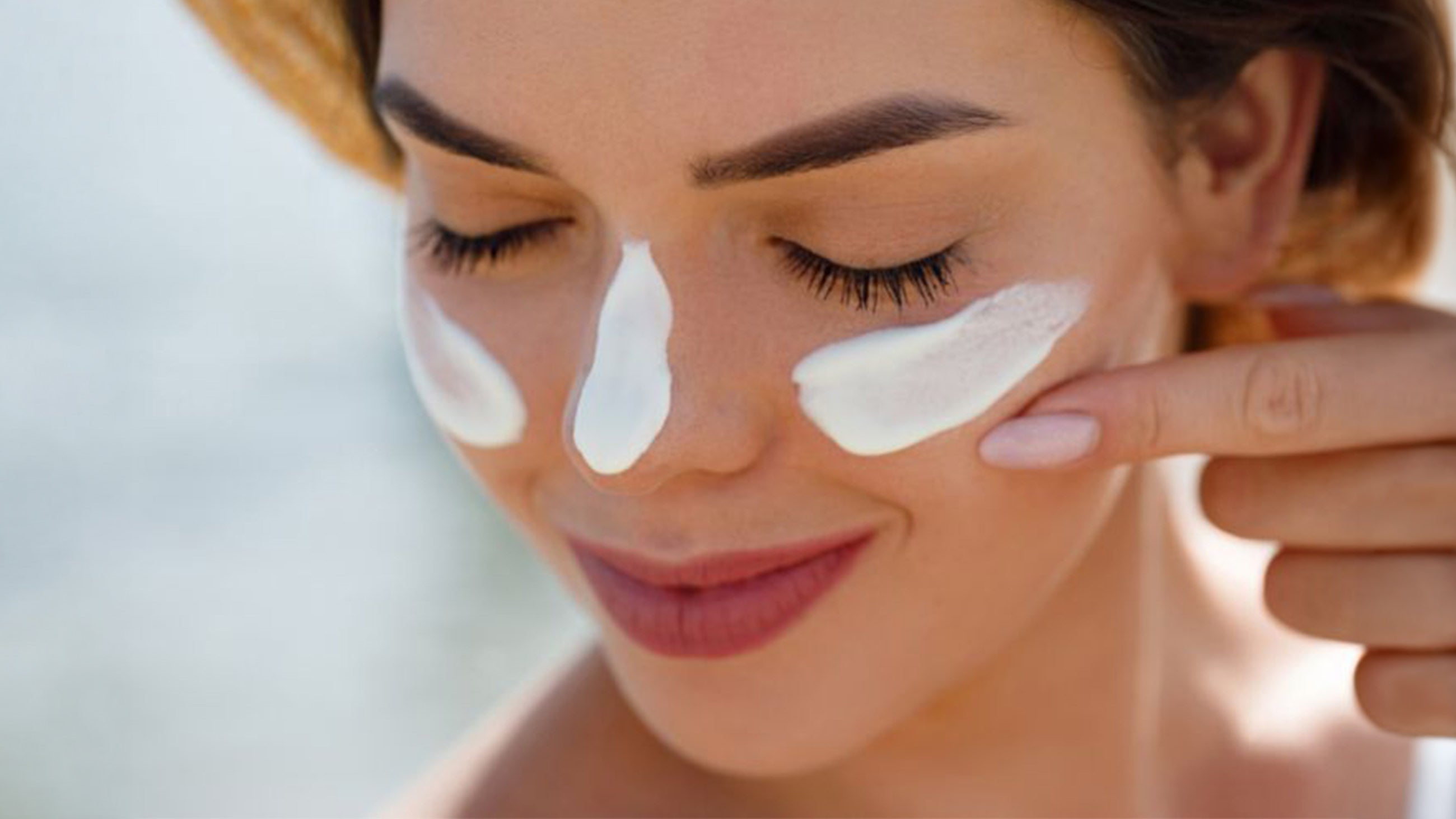
Sunscreen mistakes are one of the sneakiest reasons your skin may be more vulnerable to fine lines, sunspots, uneven tone, rough texture, and visible aging. SPF is one of the simplest ways to protect your skin, but here’s the part most people miss: it only works as well as the way you use it.
A tiny dab of SPF 50 does not magically act like SPF 50. Makeup with SPF is not always enough. And your “I’m inside all day” routine may still need a little strategy, especially if you sit near windows or deal with dark spots.
The good news? These sunscreen mistakes are easy to fix once you know what to look for.
In this article, we’ll cover:
- How much sunscreen you actually need
- Why reapplying matters
- When indoor SPF makes sense
- The spots most people forget
- Why makeup SPF should be a bonus, not your base
Watch the Video First
Want the quick, visual version? Dr. Beth breaks down these five sunscreen mistakes in our latest Fix Studios YouTube video, including real-life tips for applying enough SPF, reapplying over makeup, and making sunscreen feel less confusing.
Watch the video below, then use this guide as your quick-reference SPF checklist.
Why Sunscreen Matters So Much for Aging Skin
Let’s be clear: sunscreen is not just a beach product.
Unprotected UV exposure is one of the biggest drivers of photoaging. Photoaging is the visible aging caused by light exposure, especially ultraviolet light. It can show up as wrinkles, brown spots, redness, uneven tone, rough texture, and loss of firmness.
A review published in Clinical, Cosmetic and Investigational Dermatology notes that UV exposure may account for up to 80% of visible signs of skin aging. A randomized trial published in Annals of Internal Medicine also found that regular sunscreen use helped slow skin aging in healthy adults.
So yes, daily sunscreen matters.
But using sunscreen and using sunscreen correctly are not the same thing.
That is where these five sunscreen mistakes come in.
Sunscreen Mistakes #1: You’re Not Using Nearly Enough Sunscreen
The first of the sunscreen mistakes is the big one.
Most people apply sunscreen like it is a precious serum. A little dab here. A tiny swipe there. Maybe a pea-sized amount for the whole face and neck.
The problem is that SPF testing is based on a thicker application than most people use in real life. Sunscreens are tested at 2 milligrams per square centimeter of skin, which is more than the casual dab many people apply before heading out the door.

The American Academy of Dermatology’s sunscreen application guidance recommends using enough sunscreen to cover all exposed skin. For most adults, that means about one ounce for the body, or enough to fill a shot glass.
For the face and neck, the two-finger rule is an easy visual guide.
That “tiny dab” routine can leave you with much less protection than the number on your bottle suggests.
The Fix
Use the two-finger rule for your face and neck.
Squeeze two full lines of sunscreen onto your index and middle fingers. Then apply it evenly to your face, neck, and chest if exposed.
Is it perfect? Not always. Finger size and sunscreen texture matter.
But it is a much better visual guide than guessing.
And yes, it may feel like a lot at first. That is normal.
Think of it this way: you paid for SPF 30, 40, or 50. Applying enough helps you get closer to the protection you bought.

Sunscreen Mistakes #2: You Apply Sunscreen Once and Forget It
Your morning sunscreen is not a permanent force field.
Sunscreen can wear down during the day. It can rub off when you touch your face. It can break down with sweat. It can transfer onto your phone, sunglasses, mask, towel, or hands.
The American Academy of Dermatology recommends reapplying sunscreen every two hours when outdoors, and after swimming or sweating.
The FDA’s sunscreen guidance also recommends reapplying sunscreen at least every two hours, and more often if you are swimming or sweating.
That part is simple in theory.
In real life? Not so simple.
Because a lot of us are wearing makeup, driving between errands, walking the dog, sitting at baseball games, heading to lunch, or trying to touch up without ruining the whole face.
The Fix
Use a reapplication plan that fits your life.
The best option is another layer of sunscreen lotion or cream. That gives the most dependable coverage.
Sunscreen sticks can be helpful for touch-ups, especially on the nose, cheekbones, forehead, and backs of the hands.
Powder SPF and SPF setting sprays can be useful backup tools, especially over makeup.
But real talk: a delicate little fairy mist is not the same as a full sunscreen application.
If you use a spray or powder, you need to be generous. Think of those as touch-up tools, not your whole sun-protection plan.
Here is a realistic hierarchy:
- Lotion or cream sunscreen when possible.
- Stick sunscreen for targeted touch-ups.
- Powder or spray SPF as a backup when you need convenience.
The goal is not perfection. The goal is better protection more often.
Sunscreen Mistakes #3: You Only Wear Sunscreen on Sunny Days
A lot of people treat sunscreen like a vacation product.
Beach day? Sunscreen.
Pool day? Sunscreen.
Sunny summer day? Sunscreen.
Cloudy day, cold day, rainy day, winter day, or “I’m just sitting inside” day? The sunscreen stays in the drawer.
That is where aging rays get sneaky and this is one of the most common sunscreen mistakes.
UVA rays are the rays we often associate with visible aging changes like wrinkles, age spots, and collagen damage. UVB rays are more associated with burning.
Easy memory trick:
UVA = aging.
UVB = burning.
The American Academy of Dermatology notes that UVA rays can prematurely age skin and pass through window glass. That means your skin can still be exposed while driving, sitting near a window, working beside bright natural light, or walking outside on a cloudy day.
And yes, Ohio weather absolutely counts. We can have clouds, rain, sun, wind, and “what season is this?” all before lunch.
What About Sunscreen Indoors?
Here is where nuance matters.
Your laptop is not the sun.
We are not acting like your inbox has the same energy as July at Disney World.
But if you sit near windows, sunscreen is smart.
And if you are prone to melasma, dark spots, or post-acne pigmentation, visible light may matter too. Research suggests iron-oxide-containing tinted sunscreens may help protect against visible-light-induced pigmentation in some skin types.
A review on tinted sunscreens and visible light protection also notes that tinted formulas can provide protection beyond ultraviolet radiation, especially because of ingredients like iron oxides.
The Fix
Make sunscreen automatic.
Use broad-spectrum SPF 30 or higher every morning on exposed skin.
Broad-spectrum means it helps protect against both UVA and UVB rays. The FDA recommends choosing a broad-spectrum sunscreen with SPF 15 or higher as part of a sun-protection plan, and many skincare professionals recommend SPF 30 or higher for daily exposed skin.
If pigmentation is one of your main concerns, consider a tinted sunscreen with iron oxides.
For a simple morning routine, apply:
- Cleanser
- Treatment serum, if using one
- Moisturizer, if needed
- Broad-spectrum SPF 30 or higher
- Makeup, if desired
Need help building a routine that actually makes sense? Grab our free skincare layering guide so you can stop guessing what goes where.
Sunscreen Mistakes #4: You’re Missing Critical Spots
Most people remember the cheeks, nose, and forehead.
But the borders are where sunscreen routines go to disappear and contribute to the list of sunscreen mistakes.
These small missed areas get a lot of incidental sun exposure. They are also common places where people start noticing sunspots, rough texture, crepey skin, and uneven tone.
Your SPF Roll Call
Do not forget:
Ears: Especially the tops and backs.
Eyelids and around the eyes: Apply carefully. If sunscreen burns your eyes, try a mineral formula or a sunscreen stick made for the eye area.
Neck and chest: Bring your face sunscreen all the way down.
Backs of the hands: Especially if you drive often.
Lips: Use a lip balm with SPF 30 or higher.
Hairline and scalp: This is especially important if you have a defined part, thinning hair, or wear your hair pulled back. A hat is often the easiest win here.
The FDA reminds people to apply sunscreen to all exposed skin and specifically lists commonly missed areas such as the ears, nose, lips, neck, hands, hairline, and feet.
The Fix
Create a sunscreen checklist.
After applying to your face, pause and ask:
“Did I get my ears, neck, chest, hands, lips, and hairline?”
It takes ten extra seconds.
That tiny habit can make your sunscreen routine much stronger.
Sunscreen Mistakes #5: You’re Relying on the SPF in Your Makeup
We all love a multitasker.
So when your foundation says SPF 20 or SPF 30, it is tempting to think, “Perfect. Done.”
But here is the issue: quantity.
To get the SPF listed on the foundation bottle, you would need to apply a much thicker layer of makeup than most people actually wear (think clown makeup).
Most of us apply foundation for coverage and finish, not full sunscreen density.
So makeup SPF is helpful, but it should not carry the whole team, and this is why it's made the list of sunscreen mistakes.
As Dr. Beth says in the video, makeup with SPF is like a cute cardigan in January. Helpful, but we still need to know where your actual coat is.
The Fix
Think of makeup SPF as a bonus, not your base.
Apply a dedicated broad-spectrum SPF 30 or higher first.
Let it settle.
Then apply your makeup over it.
Your foundation SPF can be the cherry on top, but it should not be the whole sundae.
For touch-ups, you can use a sunscreen stick, SPF powder, or SPF spray during the day. Just remember: touch-up products work best when you use enough.
Sunscreen Is Powerful, But It Is Not the Whole Plan
Sunscreen matters.
But it is not your entire sun-protection strategy.
Shade, hats, sunglasses, UPF clothing, and avoiding peak sun when possible all help reduce UV exposure.
The FDA recommends using sunscreen along with other sun-protective measures, including limiting time in the sun, wearing protective clothing, and using sunglasses.
The goal is not to be afraid of the sun.
The goal is to stop accidentally giving UV rays unlimited access to your collagen.
We are not anti-sun.
We are pro-strategy.
Quick Sunscreen Mistakes Checklist
Use this as your daily sunscreen mistakes reset:
| Sunscreen Habit | What to Do |
| Amount | Use the two-finger rule for face and neck |
| Formula | Choose broad-spectrum SPF 30 or higher |
| Timing | Apply before sun exposure when possible |
| Reapplication | Reapply every two hours outdoors, sooner after sweating or swimming |
| Missed spots | Remember ears, neck, chest, hands, lips, hairline, and scalp |
| Makeup | Treat makeup SPF as a bonus, not your base |
| Pigmentation | Consider tinted sunscreen with iron oxides |
| Full protection | Add hats, shade, sunglasses, and UPF clothing |
When to Ask a Professional
If you already have sunspots, melasma, uneven pigment, texture changes, or visible sun damage, sunscreen is still important.
But sunscreen does not erase everything that has already happened.
That is where a customized skincare plan can help.
At Fix Studios, we help clients pair smart at-home skincare with in-office options when appropriate. That may include medical-grade skincare, facials, IPL, microneedling, or other treatments depending on your skin goals.
Not sure where to start? Shop our medical-grade skincare or schedule a consultation so we can help you build a plan that fits your skin, lifestyle, and comfort level.
FAQs About Sunscreen Mistakes
| Question | Answer |
| Do I really need sunscreen indoors? | If you sit near windows, yes. UVA rays can pass through window glass. If you are prone to melasma or dark spots, tinted sunscreen may also help support protection from visible light. |
| Are screens as damaging as the sun? | No. Screens are not the same as direct sunlight. But visible light and blue light may matter for pigmentation-prone skin, so a daily SPF habit can still be smart. |
| How much sunscreen should I use on my face? | A good guide is the two-finger rule. Bring sunscreen down to the neck and chest if exposed. |
| How often should I reapply sunscreen? | Reapply every two hours when outdoors, and more often after sweating or swimming. |
| Is makeup with SPF enough? | Usually not as your only sunscreen step. Most people do not apply enough makeup to get the labeled SPF protection. Use dedicated sunscreen first. |
| What SPF should I use daily? | Look for broad-spectrum SPF 30 or higher for everyday exposed skin. |
| Should I use tinted sunscreen? | Tinted sunscreen with iron oxides can be a great option if you deal with melasma, dark spots, or post-acne pigmentation. |
| What areas do people forget most? | Ears, neck, chest, hands, lips, hairline, and scalp are commonly missed. |
Final Thoughts: Better Sunscreen Habits, Better Skin Protection, No More Sunscreen Mistakes
Sunscreen is one of the best anti-aging tools we have.
But only when we use it correctly.
Use enough. Reapply when needed. Wear it beyond sunny days. Cover the easy-to-miss spots. And let makeup SPF be a bonus, not your main protection.
These habits may feel small, but they add up.
Your future skin will thank you for the extra ten seconds you take today and avoid these top 5 sunscreen mistakes.
Disclaimer
This article is for informational purposes only and should not be considered medical advice. Results vary from person to person. Always consult with a qualified provider before starting any treatment.


Share:
How to Use Benzoyl Peroxide Without Wrecking Your Skin Barrier
What Aesthetic Treatments to Start In Your 30s or 40s