

Benzoyl peroxide is one of those acne ingredients that people either love, fear, or blame for destroying their face.
And honestly? I get it.
When it is used the wrong way, benzoyl peroxide can leave your skin dry, red, tight, flaky, and irritated. But many times, the ingredient is not the real problem. The method is.
Most people go too strong, use too much, apply it too often, skip moisturizer, or layer it with every active product they own. That is when acne care turns into barrier chaos.
Here’s what we’ll cover:
- What benzoyl peroxide actually does
- Why 10% is not always better
- How much to use
- How to buffer it with moisturizer
- When to get professional help for acne
Prefer to Watch?
Dr. Beth breaks down exactly how to use benzoyl peroxide for acne without overdoing it. Watch the video below or click here to watch in YouTube, then keep reading for the full strength guide, routine tips, and skin barrier advice.
What Benzoyl Peroxide Actually Does
Benzoyl peroxide is not just “drying out” a pimple.
It is an acne-fighting ingredient with antimicrobial activity. In plain English, it helps reduce Cutibacterium acnes, often called C. acnes, which is one of the bacteria associated with acne. It also has mild pore-clearing benefits, which can help with the buildup that contributes to clogged pores. The NCBI Bookshelf overview of benzoyl peroxide describes benzoyl peroxide as bactericidal against C. acnes and notes its mild keratolytic effects.
That is why benzoyl peroxide has been used in acne care for so long.
The American Academy of Dermatology acne guidelines include benzoyl peroxide among recommended topical therapies for acne. They also recommend combining systemic antibiotics with benzoyl peroxide and other topical therapies when antibiotics are used, which matters because benzoyl peroxide can help reduce concerns around antibiotic resistance.
So no, benzoyl peroxide is not automatically “bad” for your skin.
But it is powerful. And powerful ingredients need a plan.
The Biggest Mistake: Stronger, Thicker, Faster
Here is the usual benzoyl peroxide routine people accidentally create:
A new breakout shows up. Panic begins.
The 10% benzoyl peroxide comes out. A thick layer goes directly on the angry spot.
Then the skin starts peeling, burning, or feeling tight.
At first, it may seem like it is working because the pimple looks drier. But then the skin barrier gets irritated. Now you are not just dealing with acne.
You are dealing with acne plus redness, flaking, sensitivity, and a very dramatic bathroom mirror moment.
Real talk: more product does not mean faster results.
It usually means more irritation.

What Strength of Benzoyl Peroxide Should You Use?
The biggest myth is that 10% benzoyl peroxide must be better than 2.5% or 5%.
Not always.
A classic double-blind study comparing 2.5%, 5%, and 10% benzoyl peroxide found that 2.5% benzoyl peroxide was equivalent to 5% and 10% for reducing inflammatory acne lesions, but the 2.5% caused less peeling, redness, and irritation.
That is a big deal.
Because the goal is not to punish your skin into behaving. The goal is to use benzoyl peroxide in a way your skin can actually tolerate.
For many facial acne routines, 2.5% to 5% benzoyl peroxide is a more reasonable starting point. The 10% strength may make more sense for body acne, like the chest or back, where the skin is thicker and often more resilient.
Unless your dermatologist or medical provider specifically told you to use 10% benzoyl peroxide on your face, it may be more irritation than benefit.
Stronger is not always smarter.
How Much Benzoyl Peroxide Should You Apply?
Think thin layer.
Not frosting. Not a mask. Not a “let me show this pimple who is boss” situation.
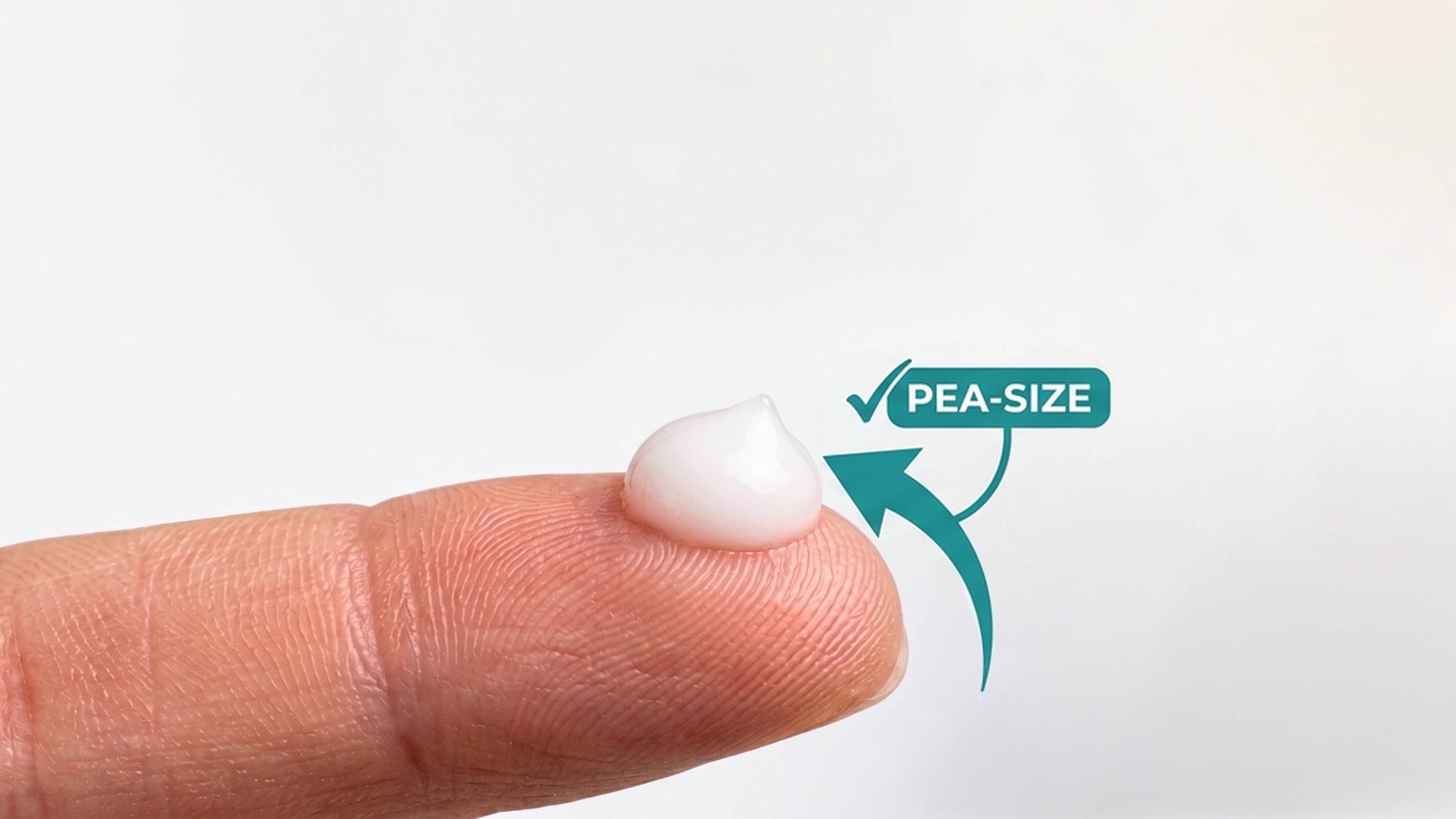
A pea-sized amount is usually enough for the entire face. If you are only treating a smaller acne-prone area, like the chin or jawline, you may need even less.
Here is the part many people miss: benzoyl peroxide can be used preventatively on acne-prone zones.
That means if you always break out on your chin, jawline, cheeks, or forehead, you may do better applying a very thin layer to that whole acne-prone area instead of chasing one pimple after it is already red and angry.
By the time a breakout appears, that process has usually been building under the surface for days.
Spot treating can help sometimes, but acne routines often work better when they support the full acne-prone zone.
How to Use Benzoyl Peroxide If Your Skin Gets Dry
If benzoyl peroxide makes you flaky, you may not need to give up on it right away.
You may need a gentler strategy.
Try Short Contact Therapy
Short contact therapy means you apply benzoyl peroxide to clean, dry skin, leave it on briefly, then rinse it off.
A common approach is:
- Wash with a gentle cleanser.
- Pat your skin dry.
- Apply a thin layer of benzoyl peroxide.
- Leave it on for 5 to 10 minutes.
- Rinse with lukewarm water.
- Follow with moisturizer.
This can be helpful for people who cannot tolerate leaving benzoyl peroxide on overnight.
A 2022 study on minimum contact time for benzoyl peroxide against C. acnes found that contact time varied by strength. In that study, 5% and 10% benzoyl peroxide worked faster in vitro, while 2.5% needed more contact time.
Translation: short contact therapy can be a helpful tolerance strategy, but it is not a magic 30-second cure for everyone.
Try Buffering With Moisturizer
Buffering means using moisturizer to reduce irritation.
Some people call this the hydration sandwich.
It looks like this:
- Apply a lightweight, non-comedogenic moisturizer.
- Let it settle.
- Apply a thin layer of benzoyl peroxide.
- Add another layer of moisturizer if needed.
Yes, “hydration sandwich” sounds like something that should come with a tiny spa cucumber on the side.
But for sensitive skin, it can make benzoyl peroxide much more tolerable.

Will buffering slightly reduce how aggressively the product penetrates? Possibly.
But if buffering helps you use benzoyl peroxide consistently without turning your face into a flaky little croissant, that tradeoff may be worth it.
Consistency beats intensity.
Your Support Routine Matters
Benzoyl peroxide should not be your entire skincare routine.
It needs a support system.
Start with a gentle cleanser. Avoid harsh scrubs, gritty exfoliants, and stripping acne washes if your skin already feels irritated.
Use a real moisturizer, even if your skin is oily. Oily skin can still be dehydrated. Look for barrier-supporting ingredients like ceramides, glycerin, and hyaluronic acid.
Then use sunscreen every day.
If your skin is dry, peeling, or irritated, the sun is not going to be your bestie. Broad-spectrum SPF 30 is part of the acne plan, not a bonus step.
Need help building a routine that makes sense? The free Fix Studios skincare layering guide can help you think through product order without making your bathroom counter feel like a chemistry lab.
You can also browse medical-grade skincare if your current routine needs more structure and support.
What Not to Mix With Benzoyl Peroxide
Please do not stack benzoyl peroxide with every active you own.
More actives do not always mean more results.
Sometimes they mean more redness.
Be cautious with strong acids, exfoliating toners, harsh scrubs, prescription topicals, dapsone, hydroquinone, and retinoids.
Traditional tretinoin is often better separated from benzoyl peroxide because benzoyl peroxide may reduce tretinoin’s effectiveness. The NCBI Bookshelf acne vulgaris review notes that benzoyl peroxide should not be applied at the same time as tretinoin because of tretinoin oxidation, and suggests using benzoyl peroxide in the morning and tretinoin in the evening when both are part of a plan.
Adapalene is different and is commonly paired with benzoyl peroxide in acne products.
But if you are using prescription acne medication, have severe irritation, are pregnant, are breastfeeding, or are not sure what your products are doing together, check with a qualified medical provider.
Your skin does not need a guessing game.
It needs a plan.
Benzoyl Peroxide Safety Tips
Benzoyl peroxide has a few practical safety notes that deserve attention.
First, it can bleach fabric.
Towels, pillowcases, shirts, washcloths, pajamas — benzoyl peroxide does not care. Use white towels, wash your hands after applying it, and be careful around darker fabrics.
Second, higher concentrations can be more irritating. Dryness, redness, and scaling are known side effects, especially when benzoyl peroxide is used too aggressively.
Third, store it properly.
In March 2025, the FDA shared updated testing information on benzoyl peroxide acne products and benzene. The FDA reported that more than 90% of tested benzoyl peroxide acne products had undetectable or extremely low benzene levels, while a limited number were voluntarily recalled at the retail level. The FDA also stated that even with daily use for decades, the cancer risk from the benzene levels found in those products was very low.
So do not panic. But do be smart.
Keep benzoyl peroxide at room temperature, away from heat and direct sunlight. Do not leave it in a hot car. Do not store it on a steamy bathroom windowsill. And toss expired products.
How Long Does Benzoyl Peroxide Take to Work?
Benzoyl peroxide is not instant.
You may see some improvement in active breakouts sooner, especially with redness or swelling. But acne routines usually need several weeks of consistent use before you can judge the full result.
A fair trial is often 6 to 12 weeks, unless your skin becomes too irritated to continue.
If you are peeling, burning, or getting more inflamed, do not just push harder.
Pull back.
Use it less often.
Try a lower strength.
Buffer with moisturizer.
Consider short contact therapy.
And if things still feel off, get help.
When to See a Professional for Acne
Over-the-counter benzoyl peroxide can be helpful, but it is not the right full plan for every type of acne.
You should consider seeing a provider if:
- Your acne is painful, cystic, or worsening
- You are developing acne scars
- Your skin burns, swells, or reacts strongly
- You have tried acne products for months without improvement
- You are pregnant, breastfeeding, or using prescription skincare
- Your breakouts are affecting your confidence
At Fix Studios, acne care is not about throwing random products at your skin and hoping one works. It is about looking at your skin, your routine, your sensitivity level, your goals, and creating a plan that makes sense.
If you are in Mason, Cincinnati, West Chester, Loveland, Montgomery, or the surrounding area, you can book an appointment to talk through your acne, skincare routine, and next best steps.
FAQs About Benzoyl Peroxide
| Question | Answer |
| Is benzoyl peroxide good for acne? | Yes, benzoyl peroxide can help acne because it targets acne-associated bacteria and has mild pore-clearing benefits. It works best when used correctly and consistently. |
| Is 10% benzoyl peroxide better? | Not always. For facial acne, 2.5% to 5% may be enough for many people and may cause less irritation than 10%. |
| Can benzoyl peroxide damage the skin barrier? | It can irritate the skin barrier if you use too much, too often, or too high of a strength. Moisturizer, lower strength, and short contact therapy may help. |
| Should I use benzoyl peroxide as a spot treatment? | You can, but many acne-prone people do better treating the whole breakout-prone zone with a very thin layer. |
| Can I use benzoyl peroxide with moisturizer? | Yes. Moisturizer can help reduce dryness and irritation. Some people apply moisturizer before and after benzoyl peroxide. |
| Does benzoyl peroxide bleach towels? | Yes. It can bleach towels, pillowcases, clothing, and even hair. Use white towels and wash your hands after applying it. |
| When should I stop using benzoyl peroxide? | Stop and contact a provider if you have severe burning, swelling, intense redness, allergic symptoms, or irritation that does not improve. |
The Bottom Line on Benzoyl Peroxide
Benzoyl peroxide can be a great acne ingredient.
But it is not meant to be used like a punishment.
Start with a lower strength. Use a thin layer. Support your skin with moisturizer and sunscreen. Be careful with other actives. Store it properly. And give it time.
The goal is clearer-looking skin without sacrificing your skin barrier in the process.
If benzoyl peroxide has left you dry, flaky, or frustrated, you may not need a harsher routine. You may need a smarter one.
For personalized acne skincare guidance in Mason and Greater Cincinnati, schedule a consultation with Fix Studios and let’s create a plan that supports your skin, your confidence, and your long-term skin health.
Disclaimer
This article is for informational purposes only and should not be considered medical advice. Results vary from person to person. Always consult with a qualified provider before starting any treatment.

Share:
7 Retinol Mistakes That Can Damage Your Skin Barrier
5 Sunscreen Mistakes That May Be Causing Wrinkles