


Hair restoration Cincinnati patients often start looking for answers after noticing more hair in the shower, a wider part, or thinning around the crown.
It can feel frustrating fast. For a lot of people, it also feels confusing. You hear about daily meds, hair transplant surgery, miracle shampoos, and social media claims that sound way too good to be true.
The good news is that there is another conversation happening now. One of the most exciting non-surgical options for the right candidate is combining PRP or PRF with Morpheus8.
This approach is getting attention because it supports thinning hair from more than one angle, while keeping expectations realistic.
In this article, we’ll cover:
- why hair restoration plans are changing
- how PRP and PRF support thinning hair
- what Morpheus8 does for the scalp
- who tends to be the best fit for this combination
1. Hair Restoration in Cincinnati Is Moving Beyond One-Size-Fits-All Plans
For years, many people looking for hair restoration Cincinnati were told the same thing. Use a daily medication long term. Try topical products. Wait until things get worse. Then maybe talk about surgery.
That is not the full picture anymore.
Today, better hair restoration Cincinnati plans are often built around combination treatment. Instead of asking one product or one treatment to do everything, the goal is to support the scalp and follicles in a smarter way.
That matters because thinning hair does not look the same for every person. Some women notice a widening part. Some men notice temple recession or crown thinning. Some patients deal with postpartum thinning. Others notice gradual age- or hormone-related changes.
At Fix Studios, the goal is not hype. It is a real plan based on what is happening with your scalp, your pattern of hair loss, and your goals. That is part of what makes a more personalized approach feel different from a generic routine. If you want to learn more about treatment options, start with the Hair Restoration page.
2. PRP and PRF Support Thinning Hair in a Natural Way
PRP and PRF both use your own blood. That is one reason many patients like them.
A small amount of blood is drawn and processed so the platelet-rich portion can be isolated. That part contains growth factors your body naturally uses for repair and signaling. When PRP or PRF is placed into the scalp, the goal is to create a better environment for follicles that are still there but struggling.
That distinction matters.
These treatments are usually best for thinning hair, where follicles are miniaturized but still present. They are much less likely to help an area that has been completely bald for a long time and no longer has active follicles.
This is one reason PRP hair restoration Cincinnati searches have grown in interest. People want something that feels natural, non-surgical, and rooted in real biology.
Research on platelet-rich plasma has been encouraging. A review on PubMed found PRP showed promise for improving hair density in androgenetic alopecia, even though treatment protocols still vary. That is an important point. PRP is not fluff, but it also is not magic. The right plan matters.

3. Morpheus8 Adds a Second Layer of Support for the Scalp
Most people know Morpheus8 for skin tightening. It is also becoming an important part of the non-surgical hair restoration Cincinnati conversation.
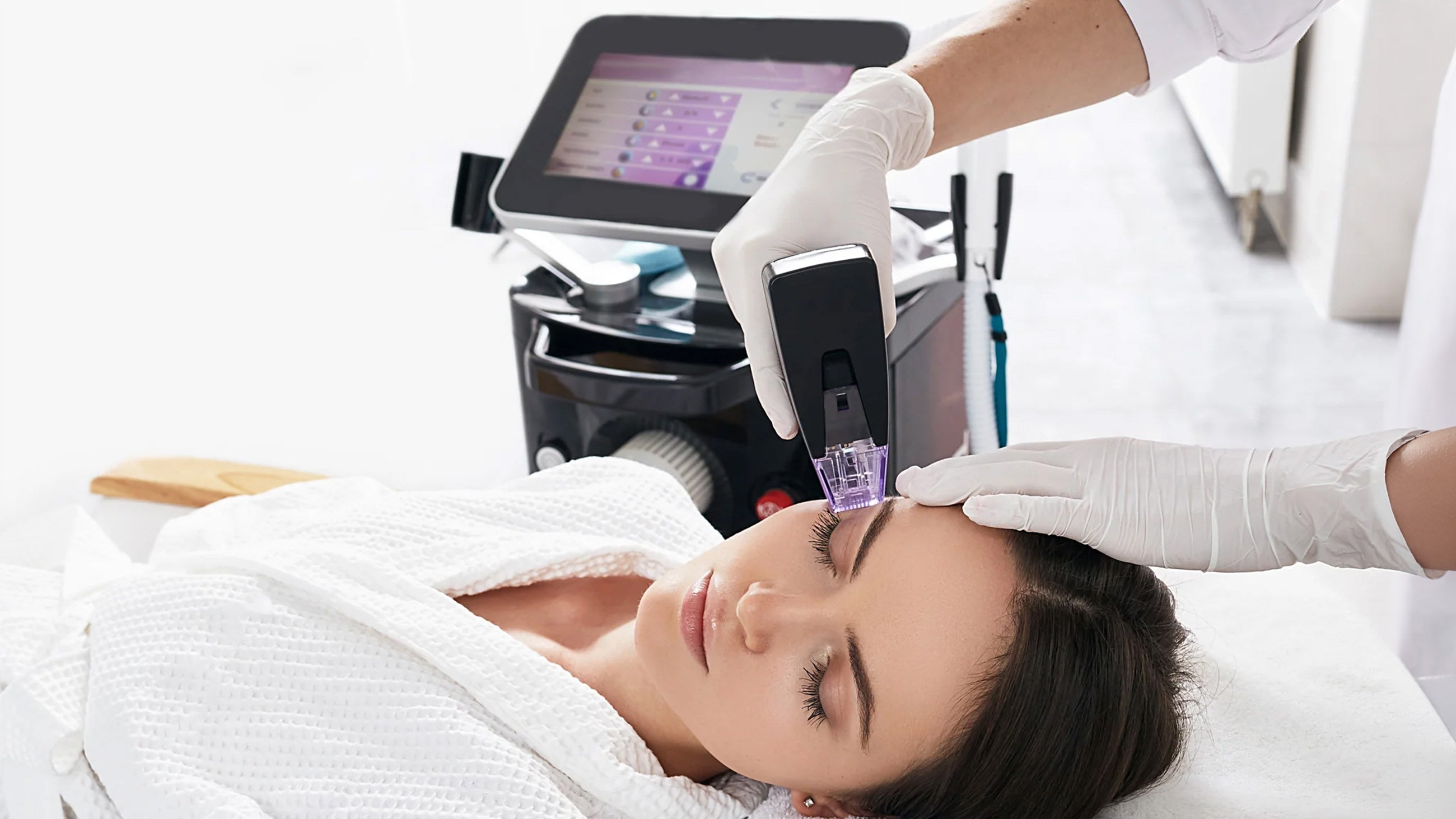
Morpheus8 uses microneedles plus radiofrequency energy. The tiny needles create controlled micro-injuries that trigger a repair response. The radiofrequency adds heat at a controlled depth, which can help remodel tissue and improve the scalp environment.
The goal is not to “shock” the scalp and hope something happens.
The goal is controlled stimulation in tissue that has become less supportive over time.
That is what makes Morpheus8 hair restoration Cincinnati so interesting. It brings a different mechanism to the table than PRP or PRF. Instead of delivering biologic signals, it helps create a more supportive setting for regeneration.
Emerging evidence supports that conversation. A study on PubMed looked at microneedling radiofrequency in patterned hair loss and found improvement in hair-growth measures after monthly sessions. That does not mean every device is the same or every patient gets the same result. It does support the bigger point that RF microneedling belongs in the hair restoration discussion.
4. The Combination Works Better Because PRP and Morpheus8 Do Different Jobs
This is the heart of the article.
PRP or PRF and Morpheus8 are not doing the exact same job. That is why the combination gets so much attention.
PRP or PRF brings biologic support and growth factors.
Morpheus8 creates controlled stimulation and helps improve the tissue environment.
So instead of asking one treatment to do all the heavy lifting, you are using two different tools that complement each other. That is why this combo can feel more powerful than PRP or PRF alone for the right patient.
A simple way to think about it is this: Morpheus8 helps prepare and stimulate the scalp, and PRP or PRF delivers regenerative support right after.
That is also why this topic matters so much for patients searching hair restoration Cincinnati options. People are not only asking whether PRP works. They are asking what works best, what is worth the investment, and what gives them a non-surgical option before jumping straight to surgery.

5. Women and Men With Thinning Hair Can Both Be Great Candidates
This treatment is not just for men.
Women can be some of the happiest hair restoration patients because even modest gains in density can make a widening part look dramatically better. That is a big deal when someone has been styling around thinning for months or years.
Men can also do very well, especially with early temple recession, hairline changes, or crown thinning.
The key is usually the same for both: the follicles are still present, but they need more support.
That is why catching hair thinning early matters. If you are seeing:
- a widening part
- more scalp visibility
- crown thinning
- temple recession
- overall shedding with reduced density
it may be time to talk about your options.
For women, the evidence is especially encouraging. A systematic review and meta-analysis available through PMC found PRP improved several hair-growth measures in female hair loss compared with controls.
This is where a personalized consultation matters more than internet advice. The right treatment depends on the pattern of loss, scalp health, and how advanced the thinning is.
6. This Treatment Is a Strong Option for People Who Want a Non-Surgical Plan
Medications still matter in hair restoration. For the right patient, they can absolutely help.
But not everyone wants their whole strategy to depend on a daily forever-routine.
That is one reason regenerative treatments have gained so much attention. Patients want a thinning hair treatment Cincinnati option that can support follicles more directly, especially when they are not ready for surgery or want something that can work alongside other therapies.
The American Academy of Dermatology notes that hair-loss treatments like minoxidil typically require continued use to maintain results. That helps explain why many patients ask about additional options that do not rely only on daily consistency.
For patients who want a non-surgical plan, PRP or PRF plus Morpheus8 can be a very appealing next step. It can stand on its own in some cases. In others, it may complement a broader plan.
What matters is being honest about what it can and cannot do.
If the scalp still has follicles that are miniaturized and struggling, this combination may help support fuller, thicker-looking hair.
If the area has been slick bald for a long time, that is a different conversation. In those cases, hair transplant surgery may make more sense.
7. The Right Protocol and Timeline Matter Just as Much as the Treatment
One of the biggest mistakes in hair restoration is expecting immediate results.
Hair growth is slow.
At Fix Studios, the protocol for Morpheus8 hair restoration Cincinnati starts with three treatments spaced about four to six weeks apart, followed by maintenance every six months.
Treatment day is straightforward.
First, there is a consultation to confirm you are a good candidate. On treatment day, the scalp is numbed with topical numbing cream for about 45 minutes. While that is working, a small amount of blood is drawn and processed to prepare the PRP or PRF. Then Morpheus8 is performed across the thinning areas, followed by placement of the PRP or PRF.
Most patients describe it as very manageable with numbing.
Afterward, the scalp may look red, feel a little tight, and be mildly tender for a day or two.
What about results?
Many patients first notice less shedding. Thickening often starts becoming more noticeable after the second treatment. From there, improvement can continue over the following months.
That is why a realistic timeline matters so much. This is not a one-and-done treatment. It is more like building momentum over time.
If you are ready to talk through timing, treatment fit, and pricing, the next step is to book a consultation.

Who Is the Best Candidate for PRP + Morpheus8 Hair Restoration?
The best fit is usually someone with thinning hair, not a completely bare area.
You may be a strong candidate if you have:
- a widening part
- diffuse thinning
- early crown thinning
- temple recession
- postpartum or hormone-related thinning
- miniaturized follicles that are still present
- interest in a non-surgical treatment option
This can be a strong choice for both women and men.
It can also make sense for patients who:
- do not want medication
- cannot tolerate medication
- want something that may complement a broader hair restoration plan
The most important part is making sure the follicles are still there and that expectations are realistic.
When PRP + Morpheus8 May Not Be the Right Fit
This treatment is much less likely to help if the area has been bald for a long time and the follicles are gone.
That is when a transplant conversation may be more realistic.
The Cleveland Clinic also notes that hair transplant can be the better option in the right situation.
That is why a real consultation matters.
Not every thinning scalp needs the same plan. Not every trendy treatment is the right tool. Honest assessment is part of getting a result you can actually feel good about.
What Makes This Hair Restoration Approach Different at Fix Studios
There are a lot of places talking about hair restoration Cincinnati right now. What makes the approach at Fix Studios different is the combination of medical precision, realistic expectations, and warm, no-pressure care.
Fix Studios is led by Dr. Beth Matre, DNP, CNP. The focus is not on pushing a treatment. It is on helping each patient understand what makes sense for their scalp, their pattern of loss, and their goals.
That matters in aesthetics.
Hair can feel emotional fast. Patients want someone who will tell them the truth, not just sell them hope in a pretty package.
If you want to learn more about the clinic’s approach, visit the new patient consultation page or read more about Morpheus8 treatments at Fix Studios.
FAQs About Hair Restoration in Cincinnati
| Question | Answer |
| Does PRP + Morpheus8 work for both women and men? | Yes. Both women and men can respond well when follicles are still present. Women often love this treatment because improved density through the part line can make styling easier and hair look fuller faster. |
| Is PRF better than PRP for hair restoration? | PRF is newer and gets attention because of its fibrin matrix and slower release profile. PRP still has the larger evidence base in hair loss. The best choice depends on the treatment plan and provider approach. |
| Can Morpheus8 regrow hair by itself? | RF microneedling has emerging support in patterned hair loss, but it may work best as part of a combination plan rather than as a standalone fix. |
| Will this work on a completely bald area? | It is much less likely to help if follicles are no longer present. In that case, transplant options may be the more realistic conversation. |
| Why not just use minoxidil or finasteride? | Some patients do use medication, but many want a non-surgical option that does not rely only on a daily routine. Others want a treatment that can complement medications rather than replace everything else. |
| How long does it take to see results? | Many patients first notice less shedding. Thickening often starts becoming more noticeable after the second treatment, with continued improvement over the following months. |
| How many treatments do I need? | The protocol starts with three initial treatments spaced about four to six weeks apart, followed by maintenance about every six months. |
Final Thoughts on Hair Restoration in Cincinnati
If you have thinning hair and want a non-surgical option, PRP or PRF plus Morpheus8 is one of the most interesting treatment combinations in hair restoration Cincinnati right now.
The reason is simple.
It supports the scalp and follicles from more than one angle.
PRP or PRF delivers growth-factor support. Morpheus8 creates controlled stimulation and helps improve the scalp environment. Together, they make more biologic sense than asking one treatment to do everything alone.
The best outcomes still come down to the right candidate, the right protocol, and honest expectations. But for patients with thinning hair, widening parts, temple recession, or crown thinning, this can be a very strong next step.
If you are ready to talk through your options, schedule a consultation with Fix Studios so we can assess your scalp, your pattern of loss, and whether this treatment plan makes sense for you.
If you’re looking for hair restoration near me, Fix Studios offers hair restoration in Cincinnati OH and is located in Mason OH and conveniently located near Montgomery OH, Sycamore Township OH, Symmes Township OH, West Chester OH, Blue Ash OH, Loveland OH, Landen OH, Sharonville OH, Evendale OH, Fairfield OH, Hamilton OH, and other areas of Greater Cincinnati.
Disclaimer
This article is for informational purposes only and should not be considered medical advice. Results vary from person to person. Always consult with a qualified provider before starting any treatment.

Share:
Botox Alternatives: What Works Better for Smoother, Firmer Skin?
Why Your Skin Loses Glow After 35 and What Actually Helps